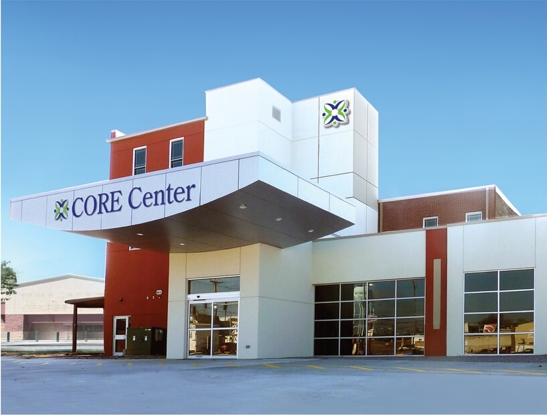

At Daviess Community Hospital’s CORE Center, manual therapy is a cornerstone of our rehabilitation approach. Also known as hands-on physical therapy, manual therapy uses the clinician’s skilled hands (and, when appropriate, soft-tissue instruments) to reduce pain, improve tissue mobility, and restore healthy joint mechanics—so you can get back to work, family, fitness, and the activities you enjoy. Care is available in Washington and Odon, Indiana, and we welcome patients from Daviess County and across Southern Indiana.
Manual therapy includes two broad categories:
Your therapist selects the right technique at the right time and pairs it with exercise, posture/breathing strategies, and movement retraining for long-term results.
Manual therapy may help when pain and stiffness limit daily function, including:
Not every condition requires manual therapy. Your clinician will determine what’s appropriate and how it fits your plan.
We start with a focused assessment of your symptoms, goals, posture, movement quality, joint mobility, and soft-tissue health.
Your clinician may apply graded joint mobilization, myofascial techniques, and/or instrument-assisted soft-tissue mobilization (IASTM) as indicated. Most people describe the sensation as comfortable pressure or “good soreness” that eases quickly.
Care is patient-paced and consent-driven. We explain options up front; you can pause or decline any portion at any time.
You’ll receive simple mobility drills, strengthening, and self-care strategies to maintain gains between visits.
These pages explain our most-used manual therapy options. We’ll keep expanding this section as we add more resources.
Looking for something specific? Ask us—our team continually updates our manual therapy toolbox to match your needs.
CORE Center | 421 E. Van Trees Street, Washington, IN
CORE Center at North Daviess | 800 S. West Street, Odon, IN
Call
(812) 254-8889 to schedule an evaluation or ask about referral requirements.
We serve patients from
Washington, Odon, Jasper, Vincennes, Loogootee, Petersburg, Bloomfield, and neighboring communities across
Southern Indiana.
Is manual therapy the same as massage?
No. Manual therapy uses
specific, skilled techniques to restore joint mechanics and soft-tissue mobility, then pairs these
gains with targeted exercise for lasting change.
Will manual therapy hurt?
Treatments are designed to be
comfortable and safe. You may feel mild, short-lived soreness as tissues and joints begin to
move better. Your clinician adjusts technique to your comfort.
Do I need manual therapy to get better?
Not always. Manual therapy is one
tool we use. Your plan may also include strengthening, mobility work, balance
training, and movement coaching.
How many sessions will I need?
It depends on your condition and goals. Your clinician will outline a plan
and expected timeline after your evaluation.

.jpg)